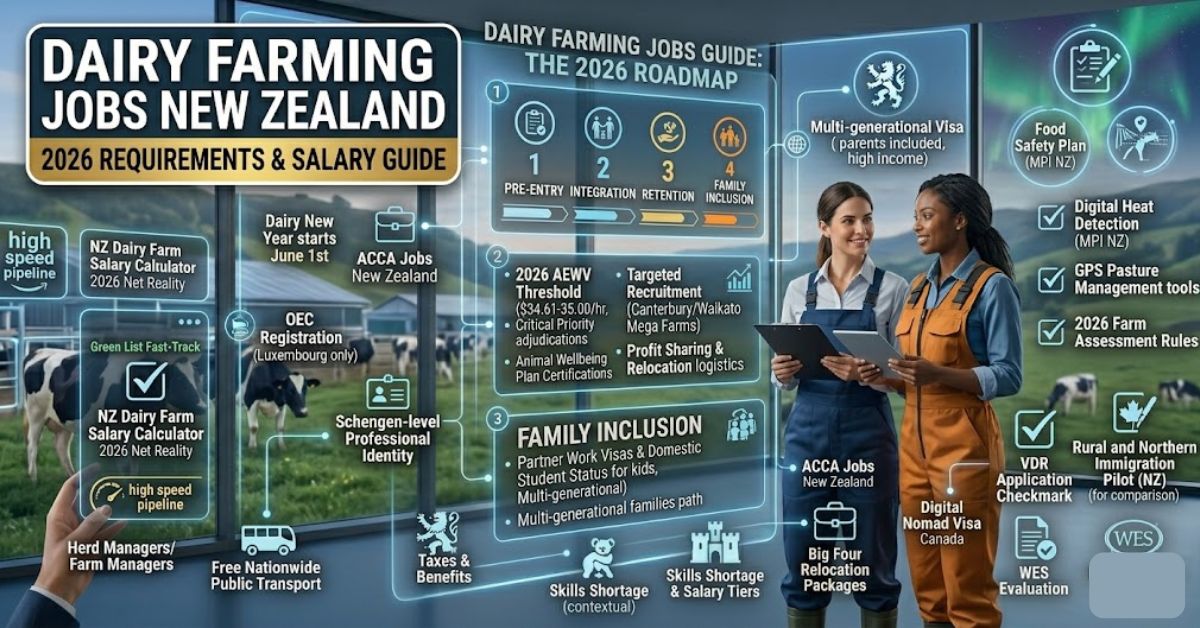
Dairy Farming Jobs in New Zealand: 2026 Requirements and Salary Guide
Thinking about a career shift? Jumping into New Zealand’s dairy sector is easily one of the boldest moves you could make in 2026. It’s no longer just a way to dodge city traffic or soak up the scenery; the whole industry has basically had a massive tech overhaul. Because automation is now doing the heavy lifting, local farms are screaming for people who actually understand digital tools and global standards.
On the money side, things are looking exceptionally bright thanks to solid international milk prices. Kiwi farm owners have plenty of cash to burn on reinvesting, so instead of tightening their belts, they’re pouring funds into top-tier training and better wages. Whether you’re a pro herd manager or just a newbie looking up the latest NZ dairy farm assistant salary, this guide is your direct, no-nonsense blueprint to a solid career.
1. The Real Reason New Zealand is Desperate for Dairy Workers in 2026
If you have been watching the global job market, it is hard to miss the massive labor gap currently hitting New Zealand’s dairy farms. As of May 2026, the demand for ANZSCO 841512 Dairy Cattle Farm Workers is higher than anything we have seen in recent history. But there is a massive catch: the NZ government has stopped looking for just cheap seasonal labor. They have pivoted toward a high-skill migration model, treating international workers as permanent partners who are key to keeping rural communities alive.
Why is the 2026 Hiring Drive So Intense?
- A Direct Ticket to Residency: This is the part everyone is talking about. Since senior dairy roles are now officially on the NZ Green List, landng a job here isn’t just about a paycheck; it is a clear, fast-track pathway to permanent residency.
- Farming is Now a Tech Job: Forget the old school image of a farmer with a bucket. Modern Kiwi farms run on automated milking systems and high-end digital heat detection tech. Because of this digital wave, farms are genuinely desperate for tech-savvy workers who can handle more than just manual labor.
- Sustainability is Creating New Roles: New Zealand is getting extremely strict about animal welfare and eco-friendly waste management. These new green rules mean that farms now need specialized staff to handle compliance and ensure every environmental standard is met.
2. Show Me the Money: 2026 Salary Breakdown
If you’re moving across the world, you need to know it’s worth it. In 2026, dairy salaries have moved well beyond the minimum wage, aligning more closely with the NZ median wage requirements for visa holders.
2026 Salary Benchmark Table (NZD)
| Job Title | Avg. Annual Salary (Gross) | Hourly Rate (Est.) | Primary Benefits |
| Dairy Farm Assistant | $62,000 – $68,000 | $29.50 – $31.00 | Free Housing, Wifi, Milk |
| Herd Manager | $76,000 – $90,000 | $35.00 – $39.00 | Work Vehicle, Health Cover |
| Assistant Manager | $88,000 – $105,000 | $40.00+ | Profit Sharing, Large Home |
| Calf Rearing Specialist | $65,000 – $75,000 | $31.50 – $34.00 | Utilities, Extra Training |
Pro Tip: The Savings Factor: Most dairy roles include on-farm housing. By cutting out rent and daily commutes, many expats are able to save roughly 60% of their take-home pay.
3. Your Ticket to Staying: NZ Visa Pathways in 2026
If you’re serious about moving, getting your head around the Accredited Employer Work Visa (AEWV) NZ is step number one. This isn’t just paperwork; it’s the bridge to your new life.
How the AEWV Actually Works
To get this visa, you first need a solid job offer from a farm that is already Accredited by the government. The farmer has to prove they genuinely couldn’t find a local Kiwi for the spot before hiring from overseas.
A big change in 2026 is the pay scale: for most of these dairy roles, you’ll need to be earning around $34.61 to $35.00 per hour to meet the latest salary thresholds. A quick tip: don’t even think about booking your VFS Global New Zealand appointment until your medicals and police clearances are 100% sorted. Even a tiny delay there can stall your whole application for weeks.
The Golden Ticket to Residency
If you manage to land a role as a Herd Manager or Farm Manager, you’ve basically hit the jackpot. These positions are often on the Green List, which means after 24 months of working, you can apply for residency. This Work to Residence model is exactly why so many families from the UK, Philippines, and South Asia are choosing the NZ dairy sector right now. It offers a predictable, long-term future instead of just a temporary paycheck.
4. Skills That Will Get You Hired Fast
NZ farms are precision-managed. To stand out in the New Zealand dairy farm recruitment pool, your CV should highlight:
- Milking Systems: Experience with Rotary or Herringbone plants.
- Tech Literacy: Familiarity with digital heat detection and GPS pasture management tools.
- Animal Care: Expertise in calving and the new Animal Wellbeing Plan Certifications.
- Compliance: Knowledge of Food Safety Plans (MPI NZ) and 2026 farm assessment rules.
5. Where are the Best Jobs?
While cows are everywhere in NZ, certain regions are hiring more aggressively:
- Canterbury: The home of Mega Farms. If you like large herds and the latest technology, look for Canterbury Dairy Farm Vacancies.
- Waikato: The traditional heart of the industry. Perfect for those who want a mix of family run and corporate environments.
- Southland: Offers incredible savings potential because the cost of living is generally lower here.
- Taranaki: A region known for its rich soil and amazing support for migrant workers.
6. How to Kickstart Your NZ Application in 2026
If you’re wondering where to even begin, take a breath, it’s not as overwhelming as it seems if you have a solid plan. However, with so many people eyeing New Zealand in 2026, you can’t afford to be messy. You need to be sharp and organized from the very first click.
The Practical Roadmap to Getting Hired:
- Ditch the Vague Resume: Kiwi farmers don’t care about fancy titles; they care about what you can actually do on the ground. Instead of a boring line like I have experience milking, try something punchy: Successfully managed a 600-cow herd using high tech Rotary systems. Adding these specific numbers makes you stand out to recruiters instantly.
- Don’t Waste Time on General Job Boards: Avoid the spray and pray method. Stick to niche platforms like DairyNZ or NZFarmCareers. These sites are specifically designed for the agricultural sector and feature Accredited Employers who already have the green light to hire globally.
- Be Aggressive with Your Paperwork: If you wait for a job offer to start your medicals or police checks, you’ve already lost. In 2026, the backlog for these documents during the peak hiring months (March to May) is no joke. Get your health and background checks done now so you can say Yes the moment an offer lands in your inbox.
7. Frequently Asked Questions
Q: When is the best time to apply?
A: The Dairy New Year starts on June 1st. The best time to interview is between February and May.
Q: Can I bring my family?
A: Yes! If you meet the salary threshold or your role is on the Green List, your partner can often get an open work visa, and your kids can attend school as domestic students.
Q: Is the housing really included?
A: Mostly, yes. Most farms provide a house for a very small service tenancy fee, which is much cheaper than renting in the city.
Final Verdict
When you look at the combination of strong milk prices and the clear cut pathway to residency, it is hard to argue that 2026 isn’t the absolute best time to make your move. By aligning your technical background with the high tech demands of New Zealand’s modern farms, you aren’t just ticking a box for a new job. You are actually securing a completely different lifestyle for yourself and your family. The door is wide open; you just need to take the first step.
Disclaimer :
The information provided here is a practical resource to help you navigate employment trends in 2026. However, it should not be treated as formal legal counsel. Because New Zealand’s labor laws are subject to updates, always confirm details with licensed professionals or official government websites before taking action. While we highlight reputable platforms and recruitment tools, we do not guarantee specific employment outcomes. Please perform your own due diligence during the application process.