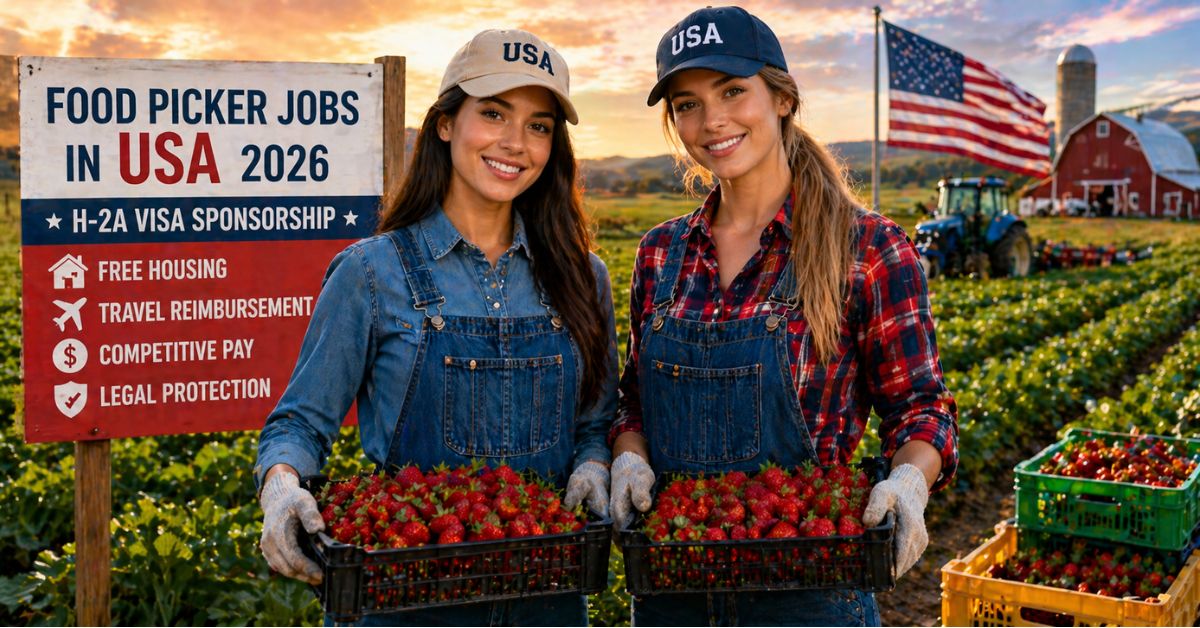
Food Picker Jobs in USA 2026: The Ultimate H-2A Visa Sponsorship Guide
Landing a USA Fruit Picker Visa in 2026 is no longer a simple matter of seasonal sweat; it has morphed into a high-stakes play in strategic labor positioning. With global supply chains hit by unprecedented volatility, the U.S. ag sector is aggressively front-loading its International Farm Worker Recruitment to hedge against the threat of catastrophic crop loss.
For the savvy global applicant, the 2026 season serves as a Golden Window for high yield entry. Whether your target is the specialized California Berry Picking hubs or the industrial grade Washington Apple Harvest 2026, success now dictates a forensic approach. This guide bypasses the fluff, delivering the raw tactical insights needed to survive the H-2A Visa Sponsorship gauntlet with professional precision.
1. Deciphering the 2026 Landscape: H-2A vs. H-2B Strategic Split
To win in this high stakes labor market, you have to understand the specific legal vehicle moving you across the border. Most food picking roles are anchored to the H-2A Visa, which is the primary gateway for Seasonal Agricultural Worker Jobs.
- H-2A (The Agricultural Heavyweight): This is your main target. It operates with no annual cap, meaning the U.S. government doesn’t slap a limit on how many specialists can enter, provided a labor shortage is verified. It is the undisputed gravity center for the American farm economy.
- H-2B (The Non Agricultural Wildcard): Occasionally, roles in food processing or high speed packaging fall here. Unlike the H-2A, these slots have a brutal numerical limit and are notoriously hard to secure due to cutthroat bidding wars between industries.
2026 Harvest Outlook: Mapping the Labor Demand
| State | Primary Crop Focus | Peak Operational Window | Sponsorship Intensity |
| Washington | Apples & Cherries | August – November | Very High |
| California | Berries & Grapes | Year-round | Extreme |
| Florida | Citrus (Oranges) | December – May | High |
| Georgia | Peaches & Pecans | May – August | Medium-High |
| Wisconsin | Root Vegetables | September – October | Medium |
2. The Financial Blueprint: Navigating the AEWR & Earnings
The U.S. government enforces a strict protectionist floor for international labor known as the Adverse Effect Wage Rate (AEWR). This isn’t just a suggestion; it’s a mandatory minimum wage that employers must hit to ensure that bringing in foreign specialists doesn’t undercut the local domestic workforce.
By 2026, the AEWR will have been aggressively recalibrated to keep pace with brutal inflationary pressures. If you are targeting high yield states like Washington or California, expect base hourly rates to breach the $18.50 – $20.00 mark. Most high-performance contracts also include piece rate bonuses, essentially rewarding your speed with extra cash for every bucket or bin cleared transforming a standard wage into a high octane earning opportunity.
Expert Insight: Never sign a deal that doesn’t explicitly guarantee Free housing for farm workers USA. Under federal H-2A statutes, the employer is legally obligated to provide housing that meets stringent safety codes at zero cost to you. Furthermore, they are mandated to reimburse your entire inbound travel investment once you reach the 50% contract milestone. If they aren’t offering this, they aren’t following the law.
3. Step by Step: How to Secure a 2026 Sponsorship
Applying for a Farm Hand Visa Sponsorship requires more than a simple CV; it requires impeccable timing and a “filter-busting” strategy.
Phase 1: The Agency Filter
Most U.S. farmers do not hire directly from abroad; they use Agricultural Staffing Agencies. Search for firms with BECON Registered Compliance or those certified by the U.S. Department of Labor. Look for recruiters specialized in the 2026 seasonal ag employment recruitment cycle to avoid outdated listings.
Phase 2: Temporary Labor Certification
Your employer must prove a Market Gap, essentially showing the government they tried and failed to find Americans for the job. Once they secure this Labor Certification, they can issue your formal job offer.
Phase 3: The Consular Gauntlet
At the U.S. Embassy, the officer is looking for two things:
- Intent to Return: You must prove ties to your home country to show you aren’t a flight risk.
- Physical Grit: Food picking is grueling. Highlight experience as a Harvest Operator or general laborer to prove you can handle the rugged grit of the fields.
4. The 2026 Worker Protection Surge: Surviving Federal Audits
As we move into the 2026 fiscal cycle, the U.S. Department of Labor (DOL) has pivoted toward a high-intensity forensic scrutiny model. The goal is simple: eliminate Disguised Employment and the predatory middle-man tactics that have plagued previous seasons. These audits aren’t just bureaucratic noise; they are a calculated effort to safeguard the Essential Interest of the American agricultural engine from fraudulent recruitment rings.
Identifying the Visa Killer Red Flags
If an agent or consultant demands a guarantee fee, placement bribe, or any flavor of under the table processing cash to lock in your job, walk away immediately. This is the undisputed visa killer.
- Zero Upfront Liability: Genuine H-2A Visa Sponsorship 2026 protocols are rigid the employer, not the worker, must absorb the absolute entirety of recruitment, administrative, and visa-filing overheads.
- The Fraud Barrier: Any request for out of pocket payment before you set foot on U.S. soil is a massive red flag. For federal auditors, participating in these payments can jeopardize your legal standing, often leading to a permanent ban during the consular interview phase.
-
Tactical Ground-Rule: If an agency cannot produce a verifiable Temporary Labor Certification number from the DOL on demand, you are likely dealing with an entity operating outside the legal wire. Always cross reference employer credentials through official BECON Registered databases or the Department of Labor’s own portals before committing your professional future to an application.
5. Harvest Intelligence: 2026 FAQ & Reality Check
Q: Can I actually pivot to an in-country H-2B extension without leaving the USA?
A: Yes, but timing is your only currency here. If you are currently active on U.S. soil under H-2A or H-2B status, you can “roll over” into a fresh contract. The critical filter buster is that your new employer must lodge the paperwork and receive an acknowledgement before your current authorized stay expires. This bridging maneuver is the primary tactic used by veteran specialists to remain billable across multiple harvest cycles without the overhead of returning home.
Q: Is there a hard “age ceiling” for high-intensity picking roles?
A: Legally, the only hard number is the 18 year old floor. Beyond that, there is no official ceiling. However, let’s be blunt: the stomach churning physical grind of the 2026 harvest means recruiters prioritize physical grit over a resume. It’s less about the birth year on your passport and more about your metabolic capacity to sustain a grueling pace under high pressure field conditions.
Q: What is the legal fallback if a Crop Failure wipes out my season?
A: This is where the Three Fourths Rule serves as your financial anchor. Under U.S. federal statutes, even if extreme weather decimates the harvest, the employer is generally mandated to pay you for at least 75% of the hours promised in your original work order. It’s a mandatory safety net designed to ensure the industrial risk of a bad season isn’t dumped entirely onto the worker’s shoulders.
6. Conclusion: Your 2026 Action Plan
The 2026 season for Food Picker Jobs in the USA is a high-yield opportunity for those who treat it as a business expansion rather than a mere job. To maximize your success:
Target High Value States: Focus on Washington and California for the highest AEWR.
-
Forensic Verification: Check your recruiter’s credentials through official DOL databases.
-
Contractual Rigor: Ensure every detail regarding housing and travel is in writing before you sign.
Disclaimer: This guide is provided for educational purposes only and does not constitute formal legal or immigration advice regarding U.S. federal statutes. While we focus on 2026 regulatory trends, policies such as the AEWR and H-2A compliance are subject to sudden legislative shifts by the Department of Labor. Readers are strongly urged to verify all recruitment credentials through official DOL portals before committing capital or personal data to any third party agency.