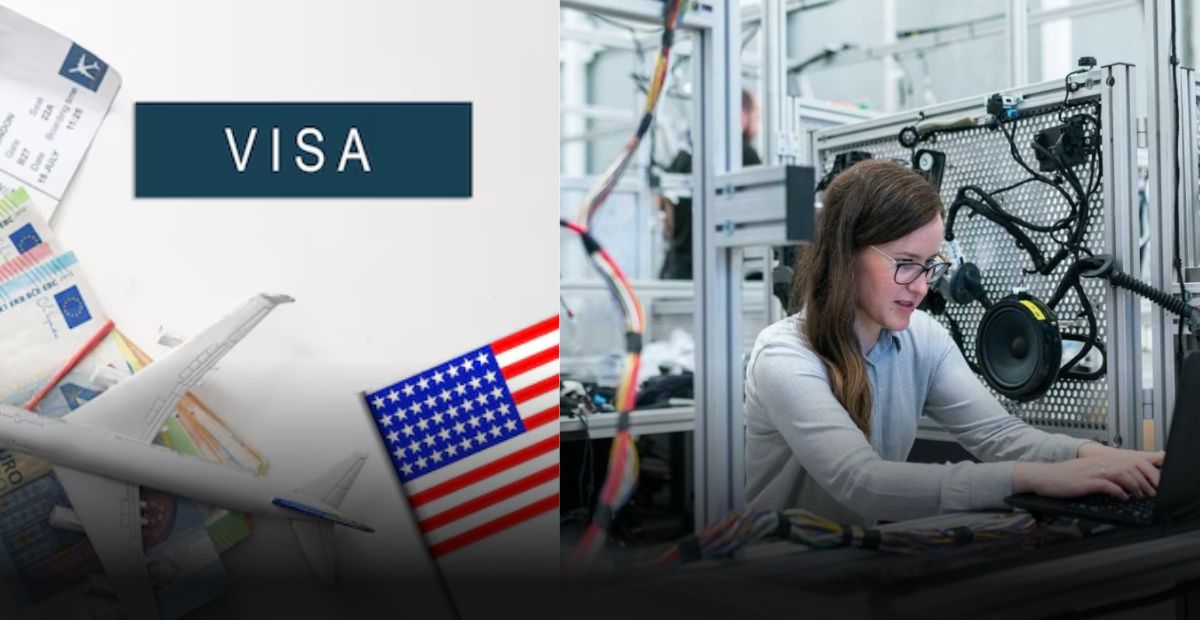
US Factory Jobs: H-2B, H-1B & EB-3 Visa Sponsorship
The American manufacturing industry, which is experiencing a resurgence due to industrial automation and tactical reshoring, is experiencing a serious skills gap. To international workers and talented employees, this means an unprecedented opening in the form of USA production employment with visa sponsorship.
The issue is not whether the factories in the U.S are recruiting foreign talent, but the question is how. The most important step is to navigate the visa environment, which is offering temporary work permits for work in production lines and permanent residency pathways on the side of engineers. It is an authority-based guide that simplifies the legal process of achieving a Factory job in the American legal visa process, and it places you in a winning position in this vibrant industry.
1. The H-2B Visa: Manual & Seasonal Production Roles
The H-2B visa is the primary mechanism for companies seeking workers for manual and temporary production roles. It provides Factory labor H-2B visa sponsorship for jobs that are seasonal, intermittent, or tied to a peak-load demand.
Ideal H-2B Roles in Manufacturing:
-
Production line worker visa sponsorship
-
General assembly worker visa support
-
Seasonal manufacturing jobs H-2B (e.g., in food processing or specific product cycles)
-
Packaging and preparation roles
The H-2B Reality: Timing and Cap
H-2B program has a limit of 66,000 visas in a year and this generates a lot of competition. To succeed, you have to work with a company that has a regular filing of such petitions.
Actionable Tip: The entire H-2B visa recruitment process factory jobs is driven by the employer. They must first obtain a Temporary Labor Certification factory jobs from the Department of Labor (DOL) and file the Form I-129 factory worker petition with USCIS, proving a shortage of U.S. workers and guaranteeing the Prevailing wage determination H-2B manufacturing. Your job search must align with their filing schedule, often many months in advance of the job start date.
2. H-1B & EB Visas: The Path for Skilled Professionals
The demand for highly educated talent to manage automated processes and complex logistics is driving significant H-1B and permanent residency sponsorship in manufacturing.
Target Skilled H-1B Roles:
The H-1B visa is reserved for Specialized occupation factory H-1B roles requiring at least a bachelor’s degree:
-
H-1B visa for Manufacturing Engineers USA (Process and Design)
-
Industrial automation specialist H-1B
-
Robotics engineer jobs visa sponsorship
-
Quality Control Analyst H-1B eligibility
From H-1B to Permanent Residency (EB-3)
Many skilled workers use the H-1B visa as a bridge to a green card. The most common pathway is the EB-3 visa classification.
-
EB-3 Green Card manufacturing skilled worker: This is the primary route for employers to offer US work permit for production workers and skilled laborers for permanent, full-time positions.
-
PERM Labor Certification manufacturing: This certification is a prerequisite for most EB-3 petitions, requiring the sponsoring employer to conduct mandatory recruitment to prove that no qualified U.S. worker is available for the job.
Geographical Hotspots for Industrial Jobs
When searching for Industrial jobs USA employer sponsorship, focus your efforts on the regions that form the backbone of American manufacturing:
-
Midwest (The “Rust Belt”): States like Ohio, Indiana, and Manufacturing jobs in Michigan with visa support have a constant need, particularly in the automotive supply chain and heavy machinery fabrication. Look for Auto assembly plant jobs visa sponsorship.
-
The Southeast: Emerging automotive, aerospace, and advanced materials centers in Tennessee, South Carolina, and Alabama.
-
Texas: Huge growth in industrialization in the fields of chemicals, energy, and electronics.
E-A-T Focus: Focus on applying to Large US factories sponsoring H-1B or established US manufacturing companies sponsoring H-2B. These firms have the legal infrastructure and resources to successfully navigate the complex immigration processes.
Actionable Steps for Foreign Manufacturing Workers
-
Skill Assessment: Determine if your skills align with the temporary/manual (H-2B) route or the specialized/degree-required (H-1B/EB) route.
-
Verify Sponsors: Instead of blindly applying, research which Foreign worker recruitment USA manufacturing firms have a public record of visa filings. Recruitment agencies factory jobs USA visa specializing in this sector can also be a valuable—and sometimes necessary—resource.
-
Prepare Credentials: For skilled roles, ensure your foreign diploma or degree is evaluated for U.S. equivalency. For trades, consolidate proof of professional certifications and years of experience to qualify as Manufacturing skilled trades visa USA.
Call to Action (CTA)
Is your job experience a perfect fit for the US manufacturing shortage? The opportunity is now.